










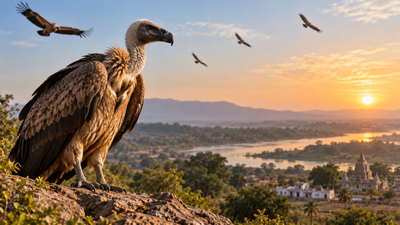
For generations, vultures were part of the everyday landscape across India. They gathered around cattle carcasses, circled above rubbish dumps and cleared away animal remains before they had time to linger. Then, in the 1990s, their numbers began to collapse at an extraordinary rate. A veterinary painkiller called diclofenac was eventually identified as a major cause. The drug was harmless to cattle at normal doses but proved lethal to vultures feeding on their carcasses. Within years, a bird population once estimated at around 50 million had fallen close to zero. According to the BBC reports, the consequences extended well beyond wildlife. A study has since linked the disappearance of vultures to rising disease, increasing stray dog numbers and around 500,000 additional human deaths between 2000 and 2005.
India’s vultures once formed a huge natural clean-up system
Vultures did a job that was easy to overlook because it happened so quickly. When livestock died, particularly cattle, the birds could descend in large numbers and strip a carcass before it became a longer-lasting source of contamination.India’s livestock population made this service especially significant. The country’s 2019 livestock census counted more than 500 million animals, the largest livestock population recorded by any country. For rural communities, the presence of large numbers of scavenging birds had long been part of the way dead animals were dealt with.The scale of the vulture population was enormous. Before the decline, India was thought to have about 50 million vultures. Their sudden disappearance was therefore not a small change in the make-up of the countryside. It removed one of the most widespread scavengers from an ecosystem that had relied on them for generations.
The veterinary drug that proved fatal to vultures
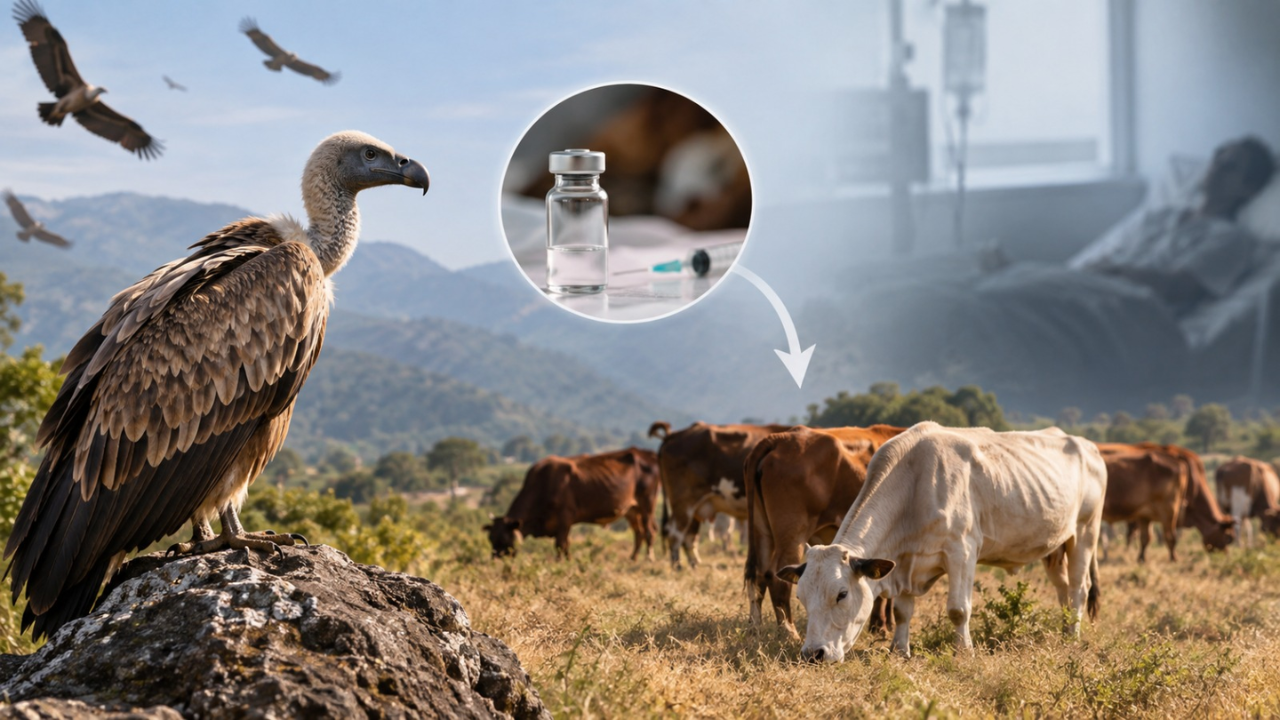
The immediate cause was tied to a common veterinary medicine. Diclofenac, a cheap non-steroidal anti-inflammatory drug, was widely used to treat cattle and other livestock suffering from pain and inflammation.Vultures were exposed when they fed on the bodies of animals that had recently received the medicine. The birds could develop kidney failure after consuming contaminated tissue and often died soon afterwards.By the middle of the 1990s, the effect was becoming impossible to ignore. Several species that had once been common had suffered catastrophic losses.India eventually prohibited the veterinary use of diclofenac in 2006. That helped slow the decline in some places, but it did not restore the populations to their former size. Reportedly, long-term declines of 98% in white-rumped vultures, 95% in Indian vultures and 91% in red-headed vultures.Other species have also been affected, although their falls have been less severe.
What happened when the carcasses stopped disappearing
The disappearance of vultures changed what happened to livestock carcasses after death. A research team led by Eyal Frank of the University of Chicago and Anant Sudarshan of the University of Warwick examined this change by comparing Indian districts with historically high vulture populations against areas where the birds had been relatively uncommon. They looked at conditions before and after the collapse and examined several measures, including human mortality, rabies vaccine sales, stray dog numbers and bacteria found in water.Their analysis found that mortality rose by more than 4% in districts where vultures had previously been abundant after the birds disappeared.The pattern was particularly pronounced in urban areas with substantial livestock populations and places where carcasses were commonly dumped.It pointed to a chain of events rather than a single cause. With fewer vultures available to consume dead animals, carcasses remained in the environment for longer. Other scavengers, including feral dogs, became more numerous. At the same time, material from decomposing animals could enter water sources through runoff and inadequate disposal.
The rise in stray dogs brought another health risk
Dogs could consume parts of carcasses, but they did not perform the same ecological role as a large population of vultures. The researchers found evidence that the loss of vultures was followed by an increase in India’s feral dog population. That mattered because stray dogs can transmit rabies to people.Rabies vaccine sales increased during the period examined by the researchers, suggesting greater demand for protection against the disease. The available supply, however, was not enough to eliminate the additional risk associated with the rise in dog numbers.The study estimated that the disappearance of vultures was associated with roughly 100,000 additional human deaths each year between 2000 and 2005. Across those five years, that amounted to about half a million deaths.The researchers also placed an economic value on the mortality associated with the change, estimating annual damages of more than $69bn during that period.
Water contamination became part of the problem
Vultures normally consume decaying animal tissue before it can remain exposed for long periods. Once their numbers collapsed, decomposing carcasses provided more opportunities for bacteria and other pathogens to enter the surrounding environment.The University of Chicago study found that faecal bacteria in water more than doubled in the affected areas. Poor carcass disposal and runoff provided possible routes for contamination to reach drinking water.This helped explain why the health effects of the vulture collapse extended beyond rabies. The birds had effectively been providing a form of biological waste removal, and their disappearance left a gap that was not easily filled.The researchers described the episode as an example of how changes to wildlife populations can create unexpected costs for people.
Three of India’s best-known vultures remain severely depleted
The white-rumped vulture has experienced the steepest decline among the species highlighted in the State of India’s Birds report. Its population has fallen by about 98% since the early 2000s. The Indian vulture has declined by around 95%, while the red-headed vulture has fallen by approximately 91%. Egyptian vultures and migratory griffon vultures have also suffered significant reductions, although their losses have not reached the same levels.The surviving birds are now found increasingly around protected areas. In such places, they may feed more often on dead wild animals rather than livestock that could have been exposed to veterinary medicines.That shift reduces one source of poisoning, but it does not remove all the pressures facing the birds.
Other dangers continue to threaten India’s vultures
Veterinary medicines remain a concern. Other drugs can pose risks to vultures, meaning the use of livestock treatments continues to require careful attention where carcasses could enter the birds’ food supply. Food availability has also changed. More livestock carcasses are now buried in some areas, while feral dogs compete with vultures for what remains available.Their nesting grounds face pressure as well. Quarrying and mining can disturb sites used by some species, making it harder for already depleted populations to recover. The birds’ current situation is therefore the result of several pressures, even though diclofenac was central to the original population crash.