






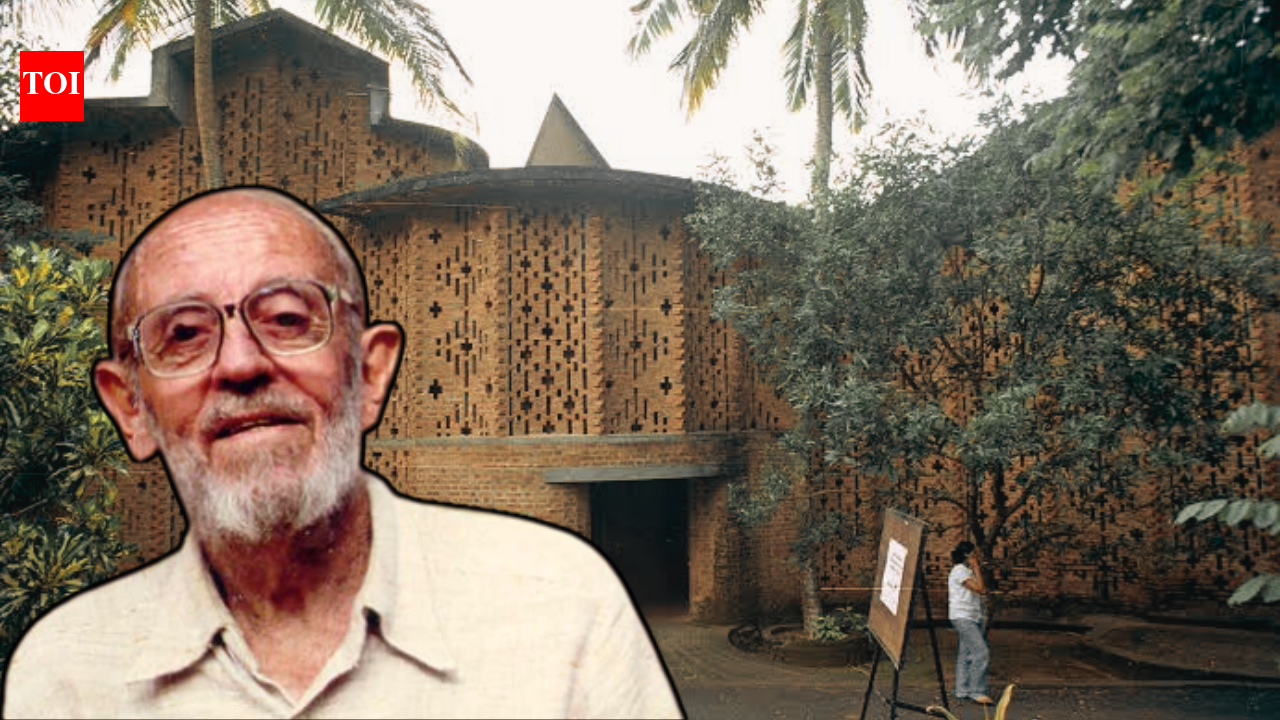
Laurie Baker believed a house did not have to be expensive to be beautiful. At a time when concrete and steel were often seen as the symbols of modern construction, the British-born architect turned to local bricks, traditional building methods and the natural surroundings to design homes and institutions across India. His work earned him the name “Gandhi of architecture” and made him one of the pioneers of low-cost and environmentally conscious building in the country.Baker died on April 1, 2007, at his home, The Hamlet, in Thiruvananthapuram, Kerala. He was 90. His life had taken him from Birmingham in England to India, where a chance meeting with Mahatma Gandhi during the 1940s influenced the direction of his career.
The chance meeting with Mahatma Gandhi
As per his official website lauriebaker.net, Laurence Wilfred Baker was born on March 2, 1917, in Birmingham, England. He studied architecture and later became a conscientious objector during World War II. Instead of serving as a combatant, he worked with medical teams helping people affected by the war. Baker was on his way back to England after his wartime service when he became stranded in Bombay, now Mumbai, for several months. Through Quaker friends, he met Mahatma Gandhi. The meeting would become an important part of Baker’s life story.Gandhi had seen the young architect’s resourcefulness in the way he had made shoes from discarded scraps. He asked whether Baker could use similar ingenuity to help build homes for India’s poor. Baker later recalled Gandhi’s influence on his thinking about architecture. In an old interview, he said that Gandhi had made him understand that the people who needed buildings most were ordinary people living in villages and congested city areas. Gandhi also spoke about using materials available close to the building site. Baker carried this idea into his work, studying local construction methods instead of relying only on expensive, imported materials.
Why he returned to India
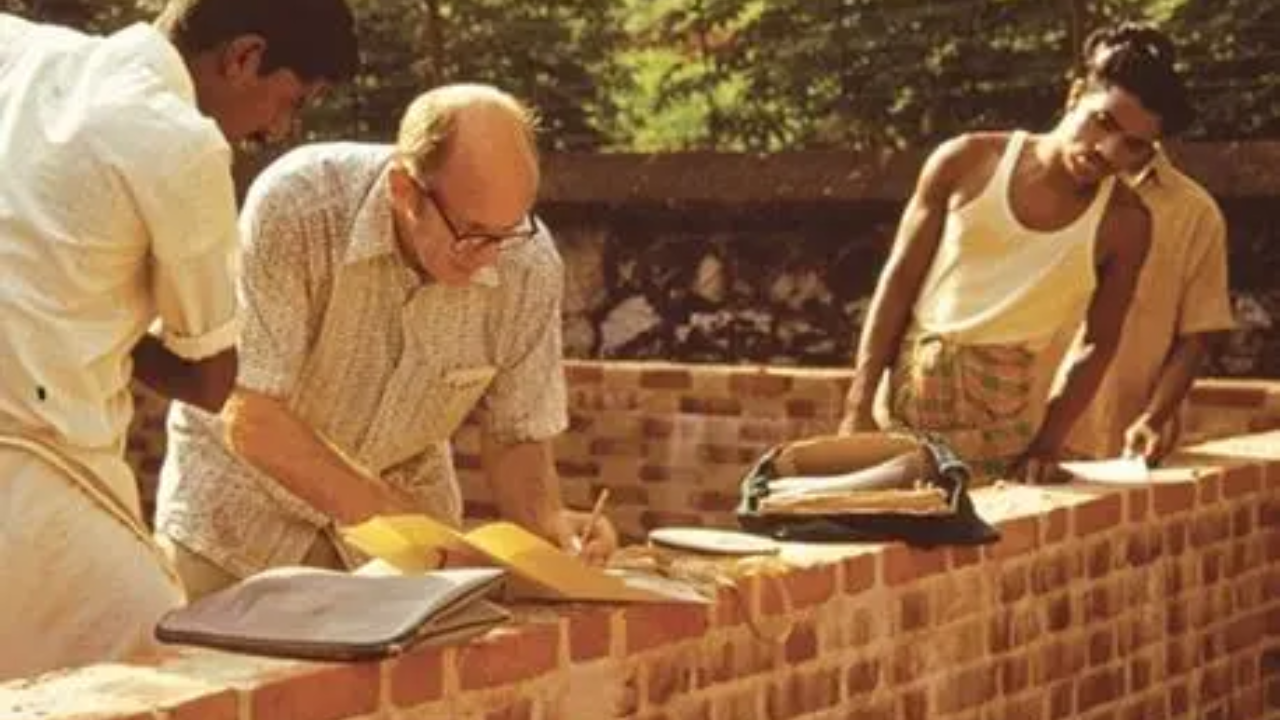
During this period, he met Elizabeth Jacob, a doctor involved in leprosy care. The two married in 1948.
Baker returned to India in 1945, working with a missionary organisation involved in caring for people affected by leprosy. His early work included improving old leprosy asylums and creating better hospitals and rehabilitation facilities. As reported by the Los Angeles Times, his work with the mission took him across India and helped him understand the value of locally available construction materials.During this period, he met Elizabeth Jacob, a doctor involved in leprosy care. The two married in 1948. The couple later worked in the Himalayan region, specifically in the Pithoragarh district of Uttarakhand. They lived there for 15 years and that is where Baker began to see how traditional building practices could respond to local conditions. The experience influenced his approach to architecture for the rest of his life.
From the Himalayas to Kerala
The Bakers eventually moved to Kerala, Elizabeth’s home state. They moved to Vagamon in the 1960s, where they built a home and hospital using local materials and methods. It was in Kerala that Baker’s architectural experiments developed further. He studied the climate, building traditions and skills of local craftsmen. Rather than treating low cost as an excuse for poor construction, he looked for ways to make buildings affordable while maintaining their quality and comfort. His work came to be associated with the Baker Model Low-Cost Houses. In 1965, the Bakers moved to Thiruvananthapuram. Other accounts place the family’s move to the city around 1969-70. The Kerala capital remained Baker’s home for the rest of his life.
What made Laurie Baker’s houses different
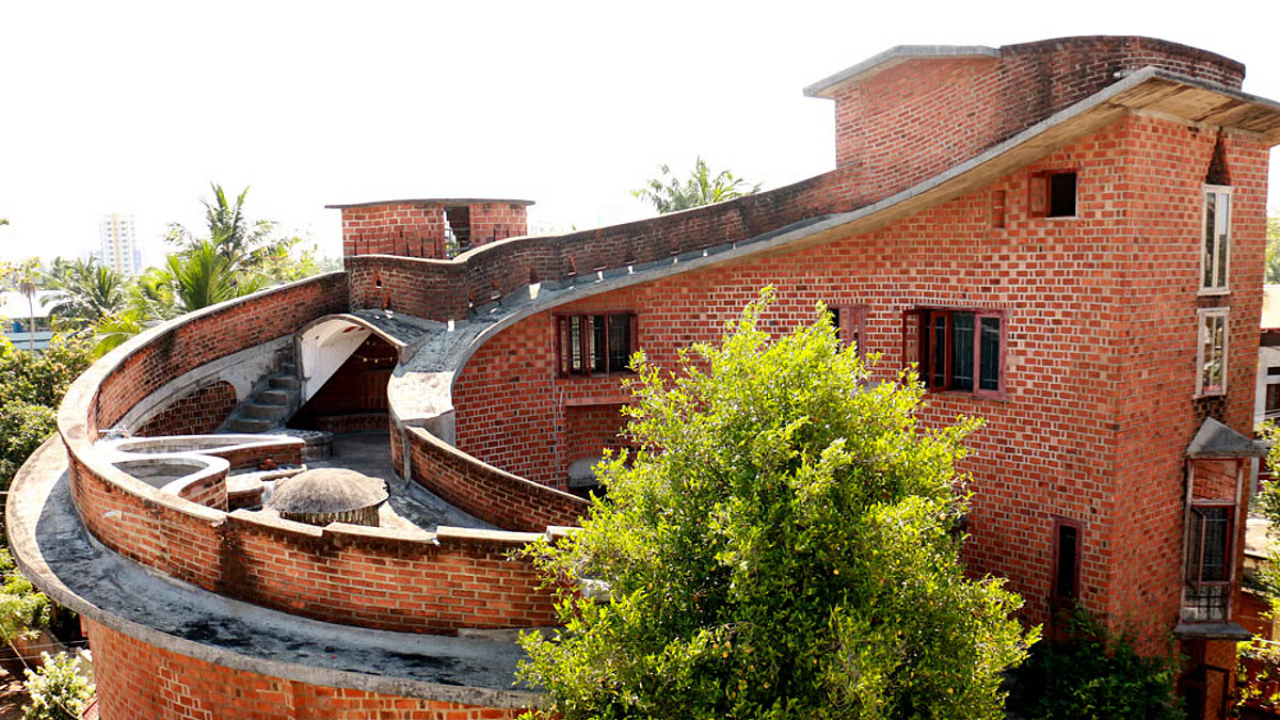
He often used brick screens, known as jali, to allow light and air into the buildings.
Baker’s buildings were recognisable for their exposed brickwork, curved walls, traditional roofs and carefully planned openings. He often used brick screens, known as jali, to allow light and air into the buildings. These openings also helped create shade and reduce the need for artificial cooling. He used local and renewable materials, including mud bricks, bamboo and lime. He also used recycled materials wherever possible. His designs often worked with the natural landscape rather than removing it. Trees, shade, ventilation and the position of the building were all part of his planning.
The architect behind some of Kerala’s famous buildings
Baker’s work was not limited to houses for poor families. He also designed schools, hospitals, institutions and public buildings. Among his best-known works is the Centre for Development Studies in Thiruvananthapuram. The campus, built in the early 1970s, is spread across a 10-acre site. According to the Los Angeles Times, the campus combines brick walls, courtyards, walkways and terraces. The building was designed around the existing landscape, including trees and the natural slope of the site.Other buildings associated with Baker include the Indian Coffee House in Thiruvananthapuram, The Hamlet, the Chitralekha Film Studio and the Laurie Baker Centre for Habitat Studies. The Indian Coffee House is particularly known for its unusual spiral form and exposed brick construction.
Recognition and final years
Baker received several awards during his career. He was awarded the Padma Shri by the Government of India and the United Nations Habitat Award. He was also nominated for the Pritzker Prize in 2006. He received Indian citizenship in late 1980s. Baker continued working and sketching well into his later years. He died at The Hamlet in Thiruvananthapuram on April 1, 2007. His legacy continues through organisations, architects and buildings that reflect his belief that good architecture does not have to be expensive.