









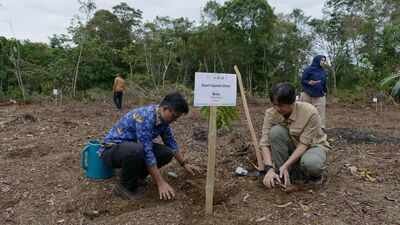
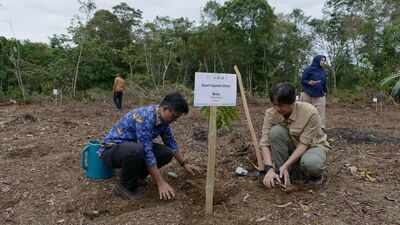
Indonesia is restoring 159 hectares of land damaged by floods and landslides in the Batang Toru ecosystem of North Sumatra, an area that provides habitat for the critically endangered Tapanuli orangutan. The restoration is centred on Aek Haminjon Village, where local communities and conservation groups are working to bring back vegetation and improve the condition of land bordering the Dolok Sipirok Nature Reserve. The effort comes after severe flooding and landslides in late 2025 caused extensive damage across the wider ecosystem and added fresh pressure to one of the world’s rarest great apes.
Importance of the 159-hectare restoration important for Tapanuli orangutans
The restoration covers a disaster-affected area in Aek Haminjon Village, Arse District, South Tapanuli Regency. According to Konservasi Indonesia, the programme aims to restore vegetation and ecological stability across the affected landscape while strengthening its role as a buffer for the Dolok Sipirok Nature Reserve.The village area is directly connected to the eastern part of the Batang Toru Ecosystem, which is recognised as a globally important biodiversity area. The landscape supports the Tapanuli orangutan along with other protected wildlife, including Sumatran tigers, tapirs and pangolins.Konservasi Indonesia reports that the Tapanuli orangutan has an estimated global population of only around 800 individuals. This makes the condition of its remaining forest especially important, as even relatively small losses can have serious consequences for such a limited population.
The restoration follows severe damage across Batang Toru
The work began after floods and landslides struck parts of Sumatra in late 2025. A separate report by Mongabay, based on a study published in Current Biology, found that extreme rainfall associated with Cyclone Senyar triggered more than 50,000 landslide scars across the Batang Toru landscape.Researchers estimated that about 8,300 hectares of forest in the western block were affected. They also estimated that the landslides may have killed around 58 Tapanuli orangutans, equivalent to about 7% of the species’ estimated global population. The western block is particularly important because it contains more than 500 orangutans and is the species’ largest known stronghold.The scale of the disaster means restoration is not simply about replacing damaged vegetation. It is also about improving the condition of areas that can support wildlife outside the most severely affected forest.
How will the damaged land be restored
Konservasi Indonesia and the Sumatra Rainforest Institute are carrying out the work with residents through a community conservation agreement. The approach combines habitat restoration with the needs of people who depend on agriculture, plantations and forest resources for their livelihoods.The restoration will use between 200 and 400 seedlings per hectare, depending on the condition of each area. Heavily disturbed sections, including old rubber plantations and corn fields with few large trees, will receive more intensive planting. Areas that still contain relatively dense secondary forest will require less intervention.The planting programme is expected to include between 35 and 49 main agricultural and tree crops, including coffee, rubber, cocoa and durian. This allows restoration to support both environmental recovery and the economic needs of the surrounding community.
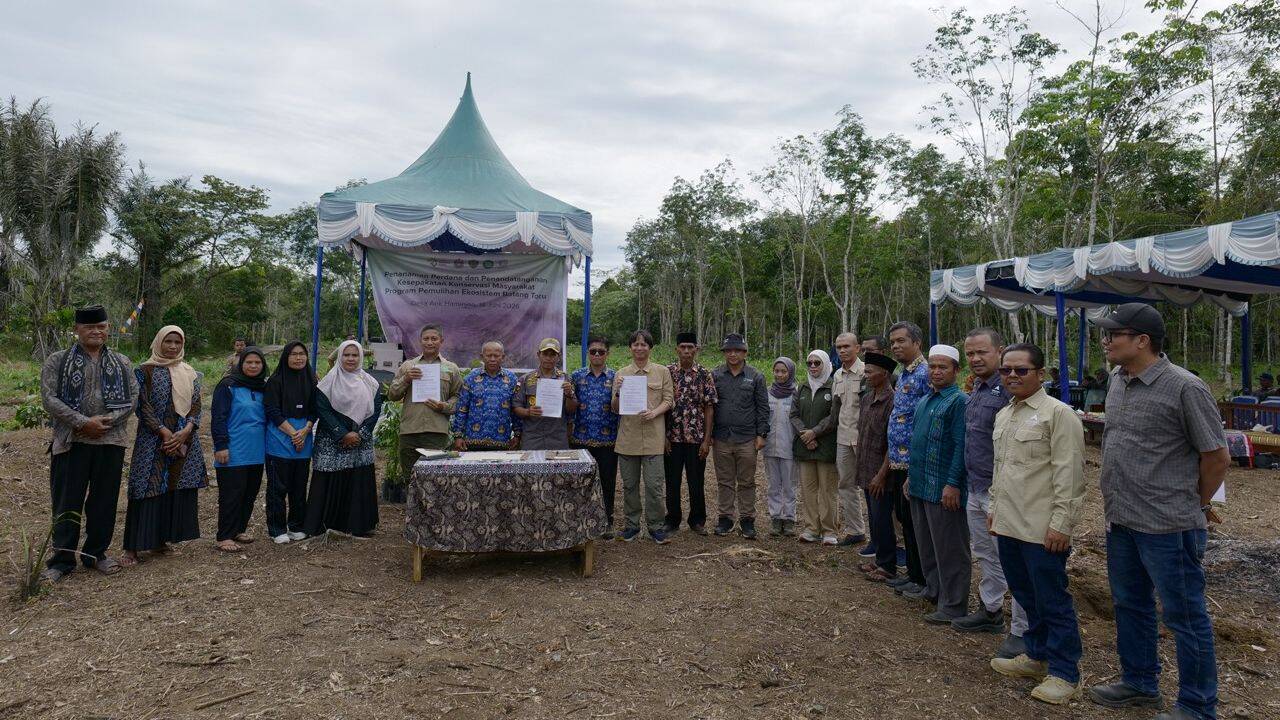
The participatory management model was designed to integrate the target of protecting wildlife habitats and the sustainability of agricultural livelihoods in Aek Haminjon Village. Image Credit: KONSERVASI Indonesia
Why local communities are central to the project
The project is designed around participation rather than treating restoration as a separate activity carried out without residents. Local people are involved in planning, nursery development, planting and future monitoring. The organisation said this approach can also reinforce community commitments to maintaining the boundaries of the nearby nature reserve under customary law.The project also begins with information gathering. Aerial photography is being used to establish baseline information about land cover, while surveys of plant diversity will provide a reference for assessing the results of planting later on.
The 2025 landslides created long-term challenges
The restoration is taking place against a wider ecological setback. Mongabay reported that the landslides removed vegetation and soil from large areas, leaving some places with very little food available for orangutans.Researchers estimated that pioneer vegetation in severely affected areas could take 5 to 10 years to recover. Surviving orangutans may face difficulties long after the landslides themselves have passed, including having to travel farther to find food and spending more energy in the process.The estimated death toll may also not represent the full impact. The study counted direct deaths linked to mapped landslides but did not include possible deaths from injuries, starvation, canopy collapse outside mapped areas or other long-term effects. Only one orangutan carcass had been publicly documented when the Mongabay report was published, despite the much larger estimated number of deaths.
What the restoration could mean for the wider ecosystem
The Batang Toru project highlights the role which damaged areas outside core forest can play, in protecting a species with such a restricted range. By improving vegetation in a buffer zone next to protected forest, the programme seeks to strengthen habitat conditions while keeping local agriculture part of the landscape.Mongabay reported that researchers have also called for better connections between the 3 isolated Tapanuli orangutan populations in the west, east and south of Batang Toru. Habitat expansion and improved connectivity could give the species more room to respond to future environmental shocks.