










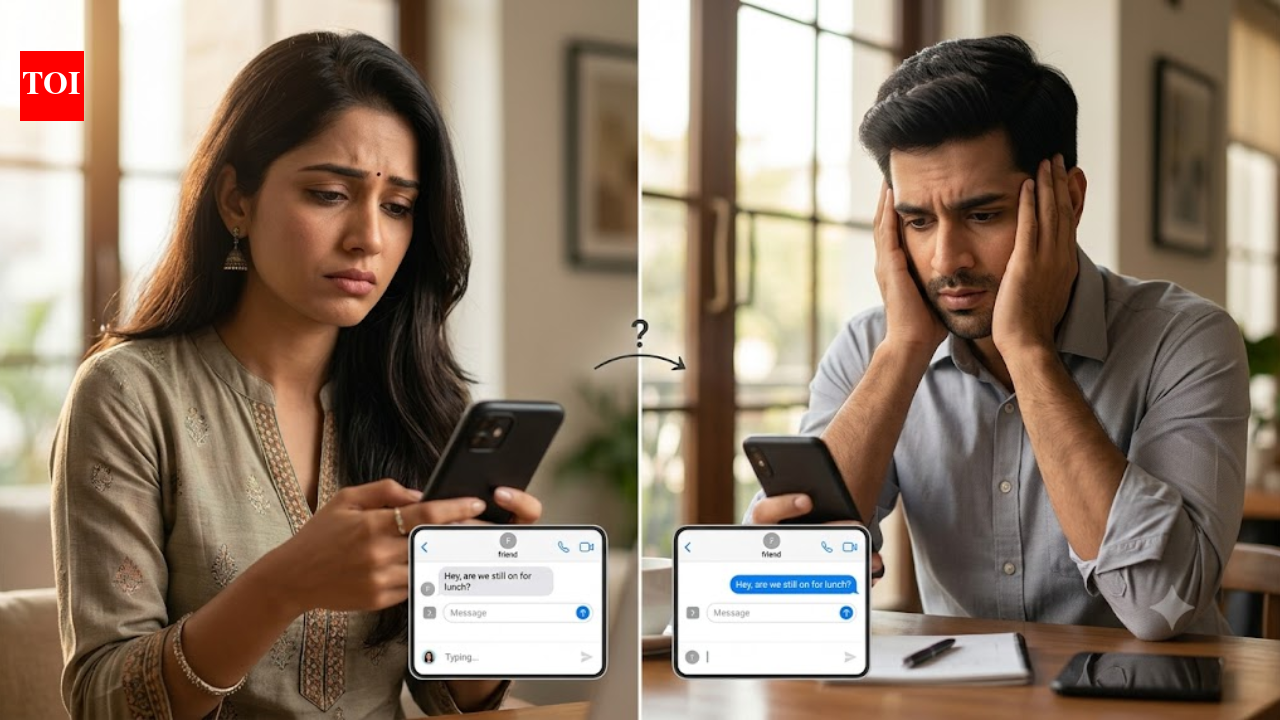
Someone stops replying to your messages. Days pass, but there is no explanation. You may assume they do not care about you or that ending the conversation meant nothing to them. But the person who stopped responding may feel worse about it than you think. A study published in Personality and Social Psychology Bulletin found that people who are ghosted tend to underestimate how bad the other person feels about ignoring them. The research suggests that people who stop responding may experience guilt, sadness and relief, even when their silence makes them appear indifferent. The study, titled ‘The Pain of Ghosting? People Underestimate How Bad Their Conversation Partners Feel About Not Responding,’ was conducted by Sophia Li of the University of California, Berkeley, Coral Zheng of the University of Cambridge and Juliana Schroeder.
People who ghost may feel worse than others expect
Ghosting means suddenly stopping communication without explaining why. It can happen in romantic relationships, friendships and casual online conversations. It may be intentional, or someone may simply forget to reply. In the first study, researchers asked 195 adults to recall an online interaction with someone who was neither a close friend nor an immediate family member. Some recalled ghosting another person, while others recalled being ghosted. Participants rated how bad they felt about the experience on a scale of one to five. People who had ghosted someone reported an average score of 2.27 for how bad they felt. Those who had been ghosted estimated that the other person would feel an average of just 1.56. This suggests that people on the receiving end often underestimate the emotional discomfort experienced by those who stop replying. The gap was particularly noticeable when the silence was unintentional, such as when someone meant to respond but forgot.The researchers also found that people who ghosted were relatively accurate in predicting how bad the other person felt. The misunderstanding was more pronounced in the opposite direction: people left waiting did not fully recognise how the person who disappeared felt.
A short message can reduce self-blame
In a second study involving 601 adults, researchers asked participants to imagine texting an acquaintance. Some imagined stopping the conversation without replying, while others imagined being left waiting. The researchers compared complete silence with a situation in which the person sent a short message: “Sorry, but I can’t talk right now.” When participants imagined ghosting someone, they expected to feel worse than recipients expected them to feel. The average scores were 3.23 and 1.94, respectively. A short reply narrowed the gap: those imagining sending the message reported an average score of 2.33, while recipients estimated 1.82.The message also changed how recipients interpreted the silence. About one-third of participants who imagined being ghosted assumed they had annoyed the other person. When a brief explanation was provided, this fell to about one in five, with most of the others assuming the person was busy. The findings suggest that a short explanation can help prevent someone from automatically blaming themselves when a message goes unanswered.
A live experiment produced a more complicated result

Photo: Canva
The researchers also tested ghosting in a live online interaction. Adults were paired for an eight-minute text conversation. Afterward, one person could choose whether to continue chatting for another five minutes or leave without an explanation. In the live experiment, people left waiting did not underestimate how bad their partners felt. Those who skipped the second conversation rated their feelings at 3.26, while their partners predicted an average score of 3.35. However, people left waiting overestimated how negatively their partners felt towards them. They predicted a score of 3.41, while those who skipped the conversation reported an average of 2.29.The researchers suggested that the two sides did not always interpret the behaviour in the same way. Those who left were less likely than their partners to describe what happened as ghosting. In an additional analysis that was not planned in advance, the researchers looked only at participants who clearly considered the behaviour to be ghosting. In this group, the earlier pattern returned: those who stopped responding felt worse than their partners expected.
Why people choose to ghost
People do not always stop responding for the same reason. Some want to end a relationship without a difficult conversation, while others struggle to communicate directly or feel uncomfortable rejecting someone. However, ghosting is not always simply a way to avoid an awkward conversation. Some people may cut off contact because they feel unsafe or uncomfortable. The reasons behind the behaviour therefore matter, and a person does not have to continue communication when doing so could put their safety at risk.
What the findings mean if you have been ghosted
The research does not mean that everyone who ghosts someone feels guilty or regrets their decision. Nor does it suggest that their discomfort cancels out the hurt caused by leaving someone without an explanation. Instead, the findings highlight a gap between what people assume and what the other person may actually feel. Silence does not necessarily mean indifference, just as feeling bad about ghosting does not mean someone wants to resume a relationship. For people who are considering ending a conversation, a short explanation may prevent unnecessary confusion when it is safe and appropriate to send one.The researchers also noted limitations. The studies involved participants in the United States, and short online conversations may not reflect the emotional complexity of being ghosted by a long-term partner or close friend. The live experiment also did not show the same overall pattern as the first two studies. The central finding is that people who stop replying may experience more emotional discomfort than the person waiting realises. A brief, clear message cannot prevent every hurt feeling, but it can give the other person more information than silence does.