









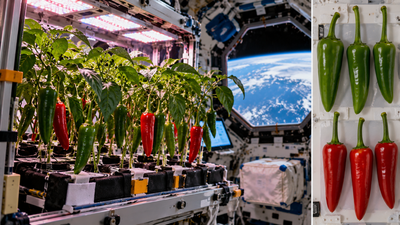
In 2021, Nasa grew Hatch chile peppers aboard the International Space Station for the first time, producing edible fruit after 137 days in microgravity. The Plant Habitat-04 experiment was designed to test whether a fruiting crop could survive and produce food in orbit, an important step towards growing fresh produce during future missions to the Moon and Mars. Four pepper plants were ultimately grown inside the station’s Advanced Plant Habitat, producing 26 peppers across two harvests. But the crop did more than provide astronauts with fresh ingredients for their meals. As per Nasa, the small stems connecting the flowers and fruit were strikingly different from those grown on Earth. While these stems were curved in ground-grown plants, they were completely straight in microgravity. The peppers also took about two weeks longer to develop in orbit, giving researchers new clues about how microgravity can influence plant growth and how space agriculture might work on longer missions.
How did Nasa get Hatch chile peppers to fruit in space
Getting the peppers to fruit required more than simply providing water and light. Once the plants flowered, the team on Earth adjusted the habitat’s fans to help disperse pollen, while astronauts also carried out some pollination by hand. The efforts worked: the first harvest took place on 29 October, when seven peppers were picked. During the final harvest, the crew collected another 19 peppers, with some prepared for analysis back on Earth and others eaten by the astronauts.The peppers also became an unexpected source of excitement for the crew. Astronauts incorporated the freshly harvested fruit into meals, including tacos, while crew members provided feedback on their flavour and texture. Matt Romeyn, the experiment’s principal investigator, said that the excitement surrounding the first harvest and the resulting “space tacos” was unprecedented for the team. Some of the fruit also appeared to be relatively spicy, although researchers were still examining how microgravity might affect the peppers’ capsaicin levels.
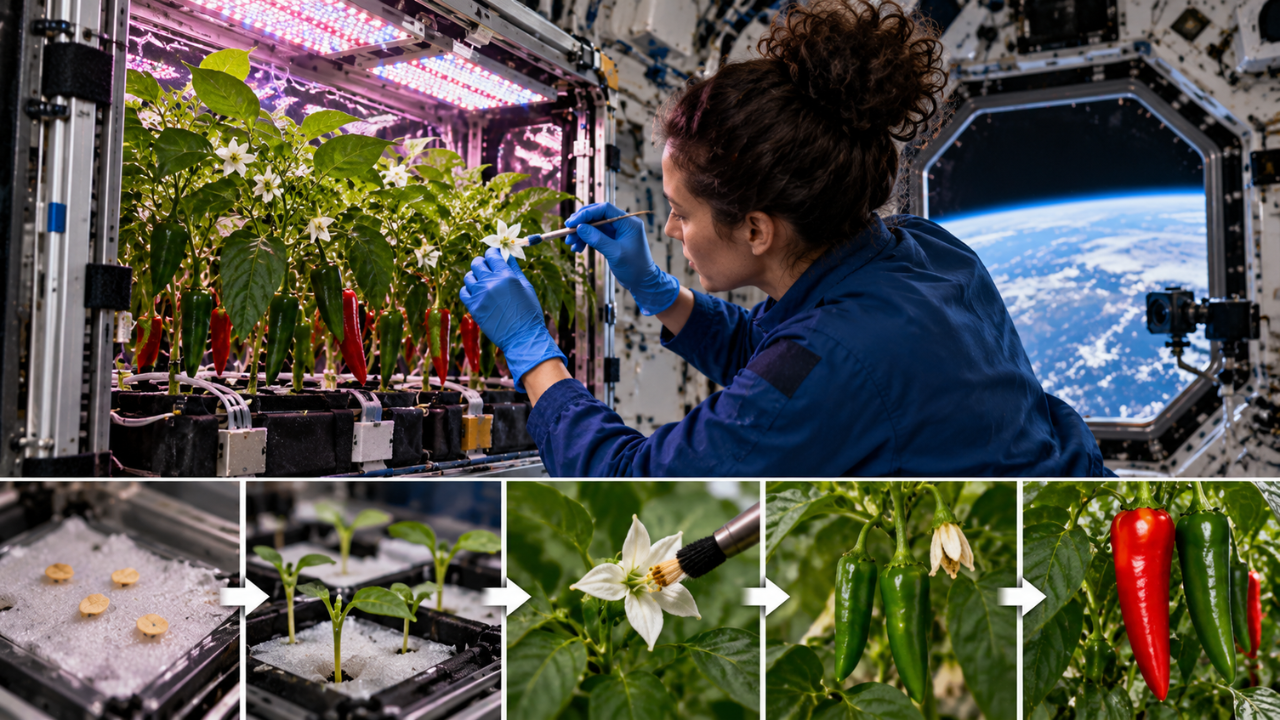
Image AI generated
How did microgravity affect pepper growth
While the successful harvest showed that peppers could produce edible fruit in orbit, researchers noticed that the plants did not develop in the same way as their counterparts on Earth. Overall, the plants grew similarly in space and on the ground, but the space-grown peppers were delayed by about two weeks. Nasa said the delay was thought to be linked to slower germination fluids in microgravity.The most striking difference was found in the pedicels, the small stems connecting the flowers and fruit to the plant. On Earth, these stems were curved, but the ones produced in microgravity were completely straight. According to Romeyn, this was “definitely a microgravity effect”, giving researchers a visible example of how the absence of normal gravity can alter plant growth even when the crop otherwise develops successfully.
How could space-grown crops support Moon and Mars missions
The success of PH-04 was important beyond the peppers themselves. Nasa is developing methods to grow food in space because future missions to the Moon and Mars could last for months or years, with far fewer opportunities to receive fresh supplies from Earth. Growing crops could provide astronauts with fresh food and variety while also helping researchers understand how plants behave in closed, controlled environments beyond Earth.The pepper experiment also demonstrated that a fruiting crop could be grown, pollinated and harvested in microgravity. Nasa described PH-04 as a successful demonstration that space crop production was moving in the right direction, with future experiments planned around crops including dwarf tomatoes, leafy greens, microgreens, legumes and herbs. The lessons from the 137-day pepper crop could therefore help shape how astronauts grow some of their own food during longer journeys to the Moon and, eventually, Mars.